
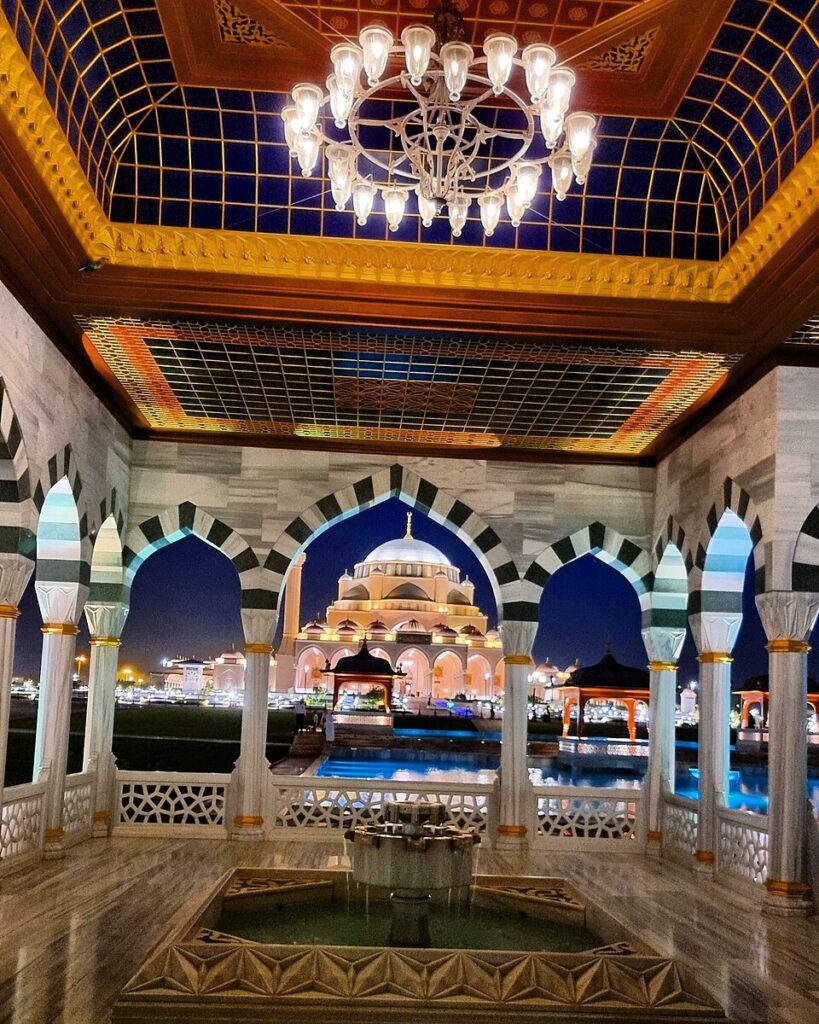
 Photo: Ahmad3027 / Wikimedia Commons, CC BY-SA 4.0
Sharjah
SHJ is Sharjah International. The museums and the waterfront are the city itself.
This Sharjah travel guide is about the museums and the waterfront, which are the city itself. Sharjah sits right next to Dubai and is often the quieter, cheaper base for both. Plan a museum day, walk the restored old town and the souks, and save an evening for the lagoons and Al Noor Island. It covers the airport, getting around, where to stay, the main sights, local rules, food, day trips, and when to go.
At a glance
- Airport: Sharjah International (SHJ), about 15 km east of the old town
- Time zone: Gulf Standard Time, UTC+4 all year, no daylight saving
- Currency: UAE dirham (AED)
- Language: Arabic; English is widely used
- Plugs: type G (British three-pin), 230 V
- Best months: November to March
- Trip length: one or two days for the city, three with the east coast
Arriving at Sharjah International (SHJ)
Sharjah International (SHJ) is the base of Air Arabia and is close to the city centre. It is one airport in the search, not the only place a trip can start. Taxis wait outside arrivals, and buses run into the city and to Dubai. Dubai is next door, but traffic between the two cities is heavy at rush hour, so allow extra time.
Many routes to the Indian subcontinent, the Middle East, and Central Asia fly from SHJ. Typical non-stop flight times are about three hours from Mumbai and around three and a half hours from Delhi.
Getting around
Sharjah has no metro. Metered taxis are easy to find, and app cabs work across the emirate. Public buses connect the city centre with Dubai, Ajman, and the other emirates. The waterfront, the Heart of Sharjah, and the museum district are close enough to walk between in the cooler months.
Where to stay
- Al Majaz and Al Qasba: hotels on Khalid Lagoon, close to the waterfront parks, restaurants, and Al Noor Island.
- The Corniche and the old town: near the museums, the Central Souq, and the Heart of Sharjah.
- Al Khan and Al Mamzar: near the beaches on the Dubai border, a short drive from Deira.
- Near the airport: practical for an early Air Arabia flight.
What to see
Museums
- Sharjah Museum of Islamic Civilization: the best single stop, on the Corniche, with galleries on Islamic science, faith, and art under a golden mosaic dome.
- Sharjah Art Museum: one of the largest art museums in the Gulf, in the old town.
- Sharjah Aquarium and Sharjah Maritime Museum: side by side in Al Khan, covering the Gulf’s sea life and pearl-diving and boat-building history.
The old town
The Heart of Sharjah heritage area has restored coral-stone houses, small museums, and souks. Souq Al Arsah is one of the oldest markets in the country, with spices, antiques, and Arabic coffee. Nearby, the Central Souq (also called the Blue Souq) is known for its blue-tiled wind towers, gold, carpets, and textiles. The Sharjah Art Foundation runs exhibitions in the old town, and its Sharjah Biennial is held every two years.
The waterfront
Al Noor Island, on Khalid Lagoon, has sculptures, gardens, and a butterfly house; it is best in the evening when the lights come on. Al Majaz Waterfront has a musical fountain, restaurants, and a long walking path. Al Qasba, along a canal between two lagoons, has cafés, restaurants, and a theatre. Al Noor Mosque and King Faisal Mosque are among the city’s landmark mosques.
Events
The Sharjah International Book Fair, one of the largest book fairs in the world, is held every November. The Sharjah Light Festival projects light shows onto landmark buildings each February. Sharjah was named Arab Capital of Culture by UNESCO in 1998, and culture is still at the centre of its calendar.
Local rules
Sharjah is more conservative than Dubai. Alcohol is not sold in the emirate, and modest dress is expected in public places: shoulders and knees should be covered, and swimwear is only for beaches and pools. Public displays of affection are frowned upon.
Food
- Emirati and Arabic dishes: machboos, grilled meats, and fresh bread from traditional bakeries.
- Seafood: the Sharjah fish market and the restaurants of Al Khan and the Corniche.
- South Asian food: the old commercial streets have Indian, Pakistani, and Bangladeshi cooking at everyday prices.
- Karak chai: sweet spiced tea from roadside cafeterias, often with a paratha.
Day trips
- Khor Fakkan and the east coast: part of Sharjah on the Gulf of Oman, about 90 minutes away through the Hajar Mountains, with beaches, a waterfront amphitheatre, and snorkelling.
- Mleiha: an archaeological centre in the desert with fossils, ancient tombs, and stargazing and dune trips.
- Dubai: next door, for the Burj Khalifa, the Creek, and the souks.
Two days in Sharjah
- Day 1: the Museum of Islamic Civilization, the Heart of Sharjah, and Souq Al Arsah; evening on Al Noor Island.
- Day 2: the Central Souq and the Art Museum, the Aquarium and Maritime Museum in Al Khan, and dinner at Al Majaz Waterfront. Add a third day for Khor Fakkan or Mleiha.
When to go
November to March is the comfortable season, and the time of the book fair and the light festival. Summer is very hot, and museum days work better then. During Ramadan, sights stay open with shorter hours, and most restaurants open after sunset.
Money and entry
The currency is the UAE dirham (AED), pegged to the US dollar. Cards are widely accepted; keep some cash for souks and small cafeterias. Entry rules depend on your passport, so check the official UAE government portal before you book.
Etiquette and practical tips
- Follow the dress code in public places, and cover your hair when entering a mosque.
- Ask before photographing people, especially women.
- Allow extra time for the road to Dubai at rush hour, in both directions.
- Carry water and avoid long walks in the midday heat from May to October.
Nearby
Delhi is one city people fly to from here. See Delhi, Dubai, and Abu Dhabi. Use the search to compare flights to SHJ from your own city.
Fares are not stored on this page. Use the search to compare live prices from the providers.