
 Photo: Vyacheslav Argenberg / Wikimedia Commons, CC BY 4.0
Tbilisi
A walkable old town, sulphur baths, and wine country nearby.
This Tbilisi travel guide covers the walkable old town, the sulphur baths, Georgian food and wine, and the day trips into wine country and the mountains just outside the city. It covers the airport, getting around, where to stay, what to see, a four-day plan, seasons, and entry rules.
At a glance
- Airport: Tbilisi International (TBS); some low-cost flights use Kutaisi (KUT) in western Georgia
- Time zone: UTC+4, no daylight saving
- Currency: Georgian lari (GEL)
- Languages: Georgian; Russian is widely understood, and many younger people speak English
- Plugs: types C and F (European two-pin), 220 V
- Best months: May to June and September to October
- Trip length: three days for the city, five to seven with wine country and the mountains
Arriving at Tbilisi International (TBS)
Flights land at Tbilisi International (TBS), about 17 km southeast of the centre. Bus 337 runs into town via the main metro hubs, and taxis and ride-hailing apps such as Bolt and Yandex Go are easy to book and inexpensive. The drive to the old town takes around 20 to 30 minutes. Many flights from Europe and the Gulf arrive in the early morning, so check whether your hotel allows early check-in.
Some low-cost airlines fly into Kutaisi (KUT), about 230 km west. Shuttle buses and trains connect Kutaisi with Tbilisi in roughly four hours, so it suits a trip that also covers western Georgia.
Getting around
The old town is the part you cover on foot, with steep cobbled lanes, so wear good shoes. The two-line metro and the city buses link the other districts and are paid with a Metromoney card or a contactless bank card. Taxis booked by app are cheap and the easiest way to cross town at night. For day trips, shared minibuses (marshrutkas) leave from Didube and other bus stations, or you can hire a driver for the day.
Where to stay
- Old Tbilisi (Kala): wooden balconies, churches, and the baths on your doorstep; the most atmospheric base.
- Sololaki: elegant old houses with painted entrance halls, just above Freedom Square.
- Vera and Vake: leafy residential districts with cafés and restaurants, a short taxi ride from the old town.
- Chugureti and Marjanishvili: on the left bank, around the Fabrika creative hub; younger and good value.
What to see
The sulphur baths
The domed brick bathhouses of Abanotubani sit over natural hot sulphur springs. Most visitors book a private room by the hour, which usually includes a hot pool and can add a traditional scrub (kisi) and massage. Chreli Abano, with its blue tiled facade, is the most photographed. Book ahead at weekends.
Narikala Fortress and the old town
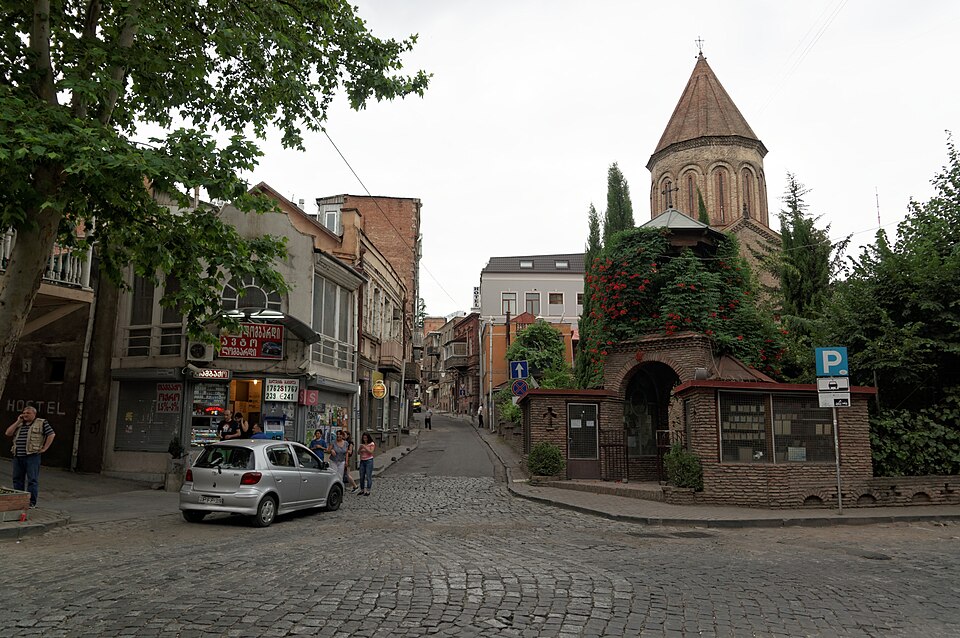
A cable car runs from Rike Park across the river and up to Narikala Fortress for the view over the city. From there, walk along the ridge to the Mother of Georgia statue, then down through the Botanical Garden or past the waterfall in the Leghvtakhevi gorge behind the baths. Back in the old town, see the Anchiskhati Basilica, the oldest surviving church in the city, the leaning clock tower by the Gabriadze puppet theatre, and Sioni Cathedral.
Rustaveli Avenue and around
The Peace Bridge, a glass-and-steel footbridge, leads from Rike Park to the old town. Rustaveli Avenue, the main boulevard, runs past the Parliament, the Opera, and the Georgian National Museum, which holds pre-Christian gold from Colchis. At the Dry Bridge flea market, sellers lay out Soviet badges, old cameras, and paintings.
Views and newer Tbilisi
The Holy Trinity Cathedral (Sameba) is one of the largest Orthodox churches in the region. A funicular climbs to Mtatsminda Park for the highest view of the city, best at sunset. Fabrika, a former Soviet sewing factory, is now a courtyard of cafés, bars, and studios.
Food and wine
- Khachapuri: cheese bread. The Adjarian version is boat-shaped with an egg and butter on top.
- Khinkali: soup dumplings. Hold them by the knot, bite, and sip the broth first.
- Badrijani nigvzit: aubergine rolls with walnut paste.
- Mtsvadi: grilled meat skewers.
- Churchkhela: walnuts threaded on a string and dipped in thickened grape juice, sold everywhere.
Georgia is one of the oldest wine-making countries in the world, and its clay-vessel qvevri winemaking is on UNESCO’s intangible heritage list. Try amber (skin-contact) whites such as Rkatsiteli, and the red Saperavi, in the many wine bars of the old town. A traditional feast (supra) is led by a toastmaster (tamada), with long toasts between courses. Tipping around 10% is normal where service is not already added to the bill.
Day trips and wine country
- Mtskheta: the old capital and a UNESCO World Heritage Site, about 30 minutes north, with Svetitskhoveli Cathedral and the hilltop Jvari Monastery above the meeting of two rivers.
- Kakheti: Georgia’s main wine region, about two hours east. The walled hilltop town of Sighnaghi makes a good base, with wineries, monasteries, and views over the Alazani Valley to the Caucasus.
- Kazbegi (Stepantsminda): about three hours north along the Georgian Military Road, past Ananuri fortress and the Gudauri ski area, to Gergeti Trinity Church below Mount Kazbek. The pass can close in winter snow.
- David Gareja: a cave monastery complex in semi-desert near the Azerbaijani border.
Four days in Tbilisi
- Day 1: the old town, the Peace Bridge, and the cable car to Narikala; a sulphur bath in the evening.
- Day 2: Rustaveli Avenue, the National Museum, the Dry Bridge market, and dinner in Sololaki.
- Day 3: day trip to Kakheti and Sighnaghi for wine.
- Day 4: Mtskheta in the morning, Fabrika and Mtatsminda at sunset. Or a full day to Kazbegi.
When to go
May to June and September to October are the best months, with warm days and cool evenings. Summer (July and August) is hot in the city, often above 30°C, but the best time for the mountains. The grape harvest (rtveli) in Kakheti is in September and October. Winter is cold but mostly dry in Tbilisi, with snow in the mountains and skiing at Gudauri.
Money and entry
The currency is the Georgian lari (GEL). Cards are widely accepted in the city; carry cash for markets, small bakeries, and rural guesthouses. Many nationalities can visit without a visa for long stays, and others apply online through the official Georgian e-Visa portal. Georgia has introduced a requirement for visitors to hold travel health insurance, so check the current rule before you travel.
Etiquette and practical tips
- In churches, women cover their hair and wear a skirt (wraps are often lent at the door), and men should not wear shorts.
- Georgians are famously hospitable; accepting a glass of wine or a plate of food is part of the visit.
- Tap water in Tbilisi is generally considered safe; many people still prefer bottled water.
- Drivers can be fast; use crossings and underpasses on the main roads.
Nearby
Another Caucasus city break is Baku. Choose your own departure city in the search to compare flights to TBS.
Fares are not stored on this page. Use the search to compare live prices from the providers.