
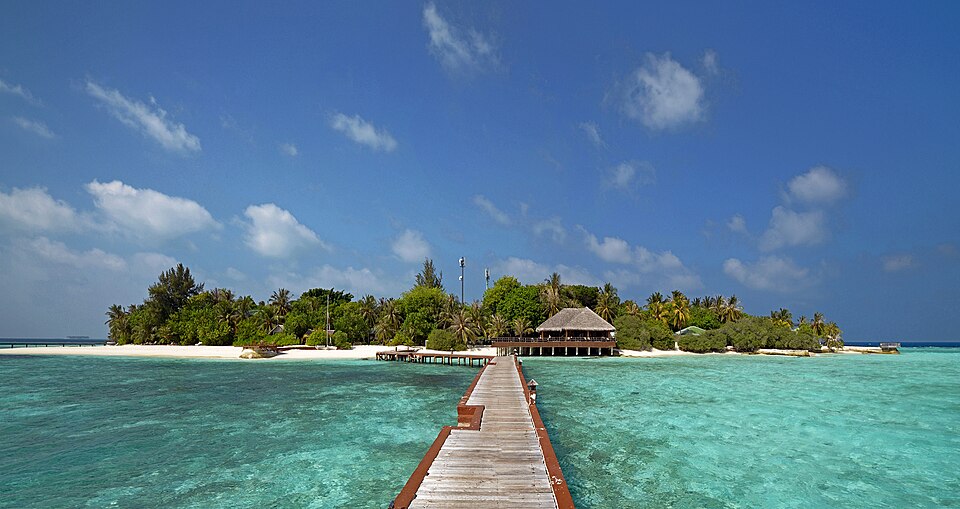
 Photo: Ввласенко / Wikimedia Commons, CC BY-SA 3.0
Maldives
Lagoons, reef islands, and a transfer by speedboat or seaplane after you land at Male (MLE).
This Maldives travel guide covers the part most first-time visitors plan least: getting from the airport to the island. After that, it covers choosing between a resort and a local island, what to do on the water, and how to fit a few hours in Malé around your flights.
At a glance
- Main airport: Velana International (MLE), next to Malé
- Time zone: UTC+5, no daylight saving
- Currency: Maldivian rufiyaa (MVR); resorts price in US dollars
- Languages: Dhivehi; English is widely spoken in tourism
- Plugs: mostly type G (UK-style) and type D, 230 V
- Driest months: roughly December to April
- Trip length: five to seven nights suits most visitors
Arriving at Velana International (MLE)
International flights land at Velana International Airport (MLE), on Hulhulé island next to the capital, Malé. A bridge links the airport to Malé and to Hulhumalé, a newer reclaimed island with a public beach and many transit hotels. Resort staff usually meet guests in the arrivals hall, and the seaplane terminal is on the other side of the same island, a short shuttle ride away.
The departure city is the one you choose in the search, and the live fare comes from that search. Most routes from Europe, the Gulf, and South and Southeast Asia arrive either direct or with one stop.
Speedboat, seaplane, or domestic flight
Most resorts take up a whole island and arrange the transfer for you. There are three ways to reach them:
- Speedboat: islands in the North and South Malé atolls are usually 20 to 90 minutes from the airport jetty.
- Seaplane: farther atolls such as Baa, Ari, and Lhaviyani are often reached by seaplane, a scenic flight of roughly 30 to 60 minutes.
- Domestic flight and boat: the most distant resorts use a domestic flight to airports such as Maamigili (VAM), Kooddoo (GKK), or Gan (GAN), followed by a boat.
Seaplanes fly only in daylight. If your international flight lands in the evening, plan a night in Hulhumalé and transfer the next morning. Ask the resort which transfer it uses before you choose a flight time, because it changes which arrival times work.
Resort island or local island
A resort island is the classic Maldives stay: one hotel, its own house reef, and meals on site. Overwater villas sit on stilts above the lagoon; beach villas open onto the sand. Meal plans range from breakfast only to all-inclusive, and because there is nowhere else to eat on a private island, the meal plan matters more than it would in a city.
Guesthouses on inhabited local islands, such as Maafushi, Thulusdhoo, Dhigurah, or Fulidhoo, cost less and are reached by public ferry or shared speedboat. You see everyday island life, and excursions to sandbanks and reefs are easy to book. Local islands follow local customs: alcohol is not sold, and swimwear is for the designated tourist (“bikini”) beaches. Some travellers split a week between the two.
What to do
Snorkelling and diving
Many resorts have a house reef you can snorkel straight from the beach. Manta rays gather in Hanifaru Bay in Baa Atoll, a UNESCO biosphere reserve, mostly between June and November. Whale sharks are seen year-round in South Ari Atoll. Dive centres on resorts and local islands run trips for every level, from first try-dives to channel dives for certified divers. Leave at least 18 to 24 hours between your last dive and your flight home.
Sandbanks, dolphins, and sunsets
Half-day trips to an empty sandbank, sunset cruises that often meet spinner dolphins, and night fishing on a traditional dhoni are offered almost everywhere. On some nights, beaches glow with bioluminescent plankton; Vaadhoo in Raa Atoll is known for it, though it is never guaranteed.
Rest
For many visitors the point is to do very little. Spa time, a kayak or paddleboard around the lagoon, and a long lunch are a full day.
A few hours in Malé
Malé is one of the most densely built capitals in the world, and small enough to walk in an afternoon. Good stops:
- The Old Friday Mosque (Hukuru Miskiy), built from carved coral stone in the 17th century.
- The fish market by the harbour, busiest in the late afternoon when the boats come in.
- Sultan Park and the National Museum next to it.
- The waterfront and the Artificial Beach on the eastern side.
Dress modestly in the capital: shoulders and knees covered. Many shops and cafés close briefly for prayer times, and Friday is the main day of rest.
Food
Maldivian cooking is built on tuna, coconut, and rice. Try mas huni (shredded tuna with coconut, onion, and chilli, eaten with flatbread for breakfast), garudhiya (a clear fish broth), and short eats called hedhikaa, such as fried fish balls and samosa-like pastries, in Malé tea shops. Resorts serve international menus, but most will cook a Maldivian dish if you ask.
A sample week
- Day 1: land at MLE, transfer to the island, and swim.
- Day 2: snorkel the house reef in the morning, rest in the afternoon.
- Day 3: sandbank trip or snorkelling excursion.
- Day 4: a free day: spa, kayak, or nothing at all.
- Day 5: dive or manta/whale-shark trip, depending on the atoll and season.
- Day 6: sunset cruise in the evening.
- Day 7: transfer back, with a few hours in Malé if the flight allows.
When to go
It is warm all year, around 30°C, with sea temperatures of about 27 to 30°C. The drier northeast monsoon runs roughly from December to April and is the busiest season. From about May to November the southwest monsoon brings more rain, wind, and rougher seas, though many days are still sunny and that season is better for manta rays in Baa Atoll. Christmas, New Year, and Easter book up first.
Money and entry
The local currency is the Maldivian rufiyaa (MVR), but resorts and most excursions price in US dollars, and cards are widely accepted. Many resorts add a service charge and taxes on top of the room rate, and a nightly green tax applies to tourist stays, so check what a quote includes.
Visitors normally get a free 30-day tourist visa on arrival with a valid passport, a confirmed booking, and an onward or return ticket. Every traveller must fill in the online traveller declaration (IMUGA) in the days before arriving. Rules change, so check with Maldives Immigration before you travel.
Good to know
- The Maldives is a Muslim country. Alcohol, pork products, and some other items cannot be brought in, and alcohol is confiscated at customs. Resorts serve alcohol on their own islands.
- Do not stand on or touch coral, and do not take shells or coral home; exporting them is not allowed.
- Use a reef-safe sunscreen and a rash vest for long snorkels. The sun near the equator is strong even on cloudy days.
- Flying a drone needs permission from the authorities and from the resort.
- During Ramadan, eating and drinking in public on local islands and in Malé should be avoided in daylight. Resorts carry on as normal.
Plan the week
That week is the Maldives beach week. Longer sailings that include the Maldives are in the Indian Ocean cruise notes. Use the search to compare flights to MLE from your own city.
Fares are not stored on this page. Use the search to compare live prices from the providers.