
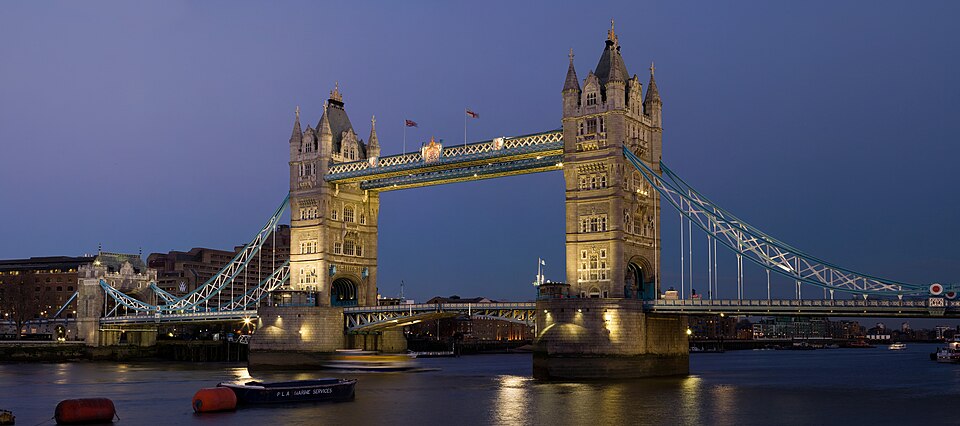
 Photo: Diliff / Wikimedia Commons, CC BY-SA 3.0
London
Museums, parks, and neighbourhoods you can cover on foot. Flights use LHR or LGW.
This London travel guide is built around one idea: one neighbourhood a day works better than crossing the city twice. Parks, a museum, and an evening in the same area is enough for a full day. Below are the airports and how to get into town, paying for transport, where to stay, the free museums, areas to explore, food, day trips, and entry rules.
At a glance
- Airports: Heathrow (LHR), Gatwick (LGW), Stansted (STN), Luton (LTN), London City (LCY)
- Time zone: GMT (UTC+0) in winter, BST (UTC+1) from late March to late October
- Currency: pound sterling (GBP)
- Language: English
- Plugs: type G (three square pins), 230 V
- Best months: May to September for long days; any month works
- Trip length: four days for the highlights, a week with day trips
Airports and getting into town
- Heathrow (LHR): the Heathrow Express reaches Paddington in about 15 minutes. The Elizabeth line runs across central London to Bond Street, Tottenham Court Road, and Liverpool Street, and the Piccadilly line is the slowest but cheapest option.
- Gatwick (LGW): the Gatwick Express runs to Victoria in about half an hour; Thameslink trains go through London Bridge and St Pancras.
- Stansted (STN): the Stansted Express runs to Liverpool Street in under an hour.
- Luton (LTN): a shuttle (the DART) links the terminal to Luton Airport Parkway station, with trains to St Pancras.
- London City (LCY): on the DLR, close to Canary Wharf and the City.
Pick a hotel near the line from your arrival airport and the first and last days get much easier.
Getting around
Tap in and out with a contactless card or phone on the Underground, buses, the Elizabeth line, the Overground, and most trains inside London. Daily and weekly fares are capped, so you never pay more than a set amount. Use the same card or phone every time, or the cap will not work. An Oyster card does the same job if you do not have contactless.
Buses take contactless only, no cash. Walking between nearby central stations, such as Covent Garden and Leicester Square, is often quicker than changing lines. Thames Clippers river buses connect Westminster, the South Bank, Tower Bridge, and Greenwich. Traffic drives on the left: look right before crossing.
Where to stay
- South Kensington and Kensington: museums, Hyde Park, and a calm base, with the Piccadilly line straight to Heathrow.
- Covent Garden, Soho, and Bloomsbury: central for theatres, restaurants, and the British Museum.
- South Bank and Southwark: along the river, near Tate Modern and Borough Market.
- King’s Cross: well connected, with Eurostar to Paris and trains to Luton and Gatwick.
- Shoreditch: bars, street art, and markets in the east.
Free museums
Many of London’s biggest museums are free to enter, though special exhibitions charge and some ask you to book a timed slot:
- The British Museum (Rosetta Stone, Parthenon sculptures, Egyptian mummies)
- The National Gallery and the National Portrait Gallery on Trafalgar Square
- Tate Modern and Tate Britain
- The Natural History Museum, the Science Museum, and the V&A, side by side in South Kensington
- The Museum of London Docklands and the Imperial War Museum
Paid highlights include the Tower of London (the Crown Jewels), Westminster Abbey, St Paul’s Cathedral, the London Eye, and Kew Gardens. Booking online is usually cheaper and avoids queues.
Areas for a day each
Westminster and the South Bank
Big Ben and the Houses of Parliament, Westminster Abbey, and Buckingham Palace through St James’s Park. Cross Westminster Bridge and walk the South Bank past the London Eye, the National Theatre, and Tate Modern to Shakespeare’s Globe and Tower Bridge.
The City and the Tower
St Paul’s Cathedral, the Sky Garden (free with a booking), the Tower of London, and a walk across Tower Bridge. Leadenhall Market is a covered Victorian arcade on the way.
South Kensington and Hyde Park
Three big museums, then Hyde Park and Kensington Gardens, the Serpentine, and Kensington Palace. Harrods is nearby in Knightsbridge.
Covent Garden, Soho, and the West End
Street performers in Covent Garden piazza, Chinatown, Soho’s restaurants, and a West End show in the evening. Same-day theatre tickets are sold at the booth in Leicester Square.
Greenwich
Take a river boat to Greenwich for the Cutty Sark, the Royal Observatory and the Prime Meridian, the National Maritime Museum, and the view from Greenwich Park.
Camden and Regent’s Park
Camden Market and the canal, then Primrose Hill for a skyline view and Regent’s Park for its rose gardens.
Food
London is one of the best places in the world to eat food from almost anywhere. Borough Market (busiest on Fridays and Saturdays; quieter on Mondays) is the classic food market. Brick Lane and Whitechapel are known for Bangladeshi curry houses, Chinatown for dim sum, and Southall and Tooting for South Asian cooking. For British classics, try fish and chips, a Sunday roast in a pub, and afternoon tea. Many restaurants add a service charge of about 12.5%; if it is not included, a 10 to 12.5% tip is normal.
Day trips
- Windsor: Windsor Castle, under an hour by train.
- Oxford and Cambridge: university cities with historic colleges, each about an hour by train.
- Bath: Roman baths and Georgian streets, about 90 minutes from Paddington.
- Brighton: pier, pebble beach, and the Royal Pavilion, about an hour from Victoria or London Bridge.
- Stonehenge: usually visited by coach tour or by train to Salisbury.
Four days in London
- Day 1: Westminster, St James’s Park, and the South Bank to Tower Bridge.
- Day 2: the Tower of London and St Paul’s, then Borough Market.
- Day 3: South Kensington museums and Hyde Park.
- Day 4: the British Museum and Covent Garden, with a West End show in the evening, or Greenwich by boat.
When to go
London is mild all year, rarely very hot or very cold, and rain can come in any season, so pack a light waterproof. May to September has the longest days, open-air events, and the busiest sights. December brings Christmas markets and lights, but daylight ends around 4 pm. January to March is the quietest time for museums and hotels. Most shops open shorter hours on Sundays.
Entry
Many visitors who do not need a UK visa now need an electronic travel authorisation (ETA) before they fly, including visitors from the EU, the US, Canada, Australia, and the Gulf states. Apply only through the official app or GOV.UK, and check what applies to your passport on GOV.UK.
Practical tips
- Stand on the right on escalators so people can pass on the left.
- Many places are card-only; you rarely need cash.
- Tap water is safe to drink, and refill points are common.
- Book big-name restaurants, popular shows, and the Sky Garden a few weeks ahead.
Plan the trip
The same plan is the London long weekend. A sample route that starts here is London to Rome. Choose the departure city in the search.
Fares are not stored on this page. Use the search to compare live prices from the providers.