
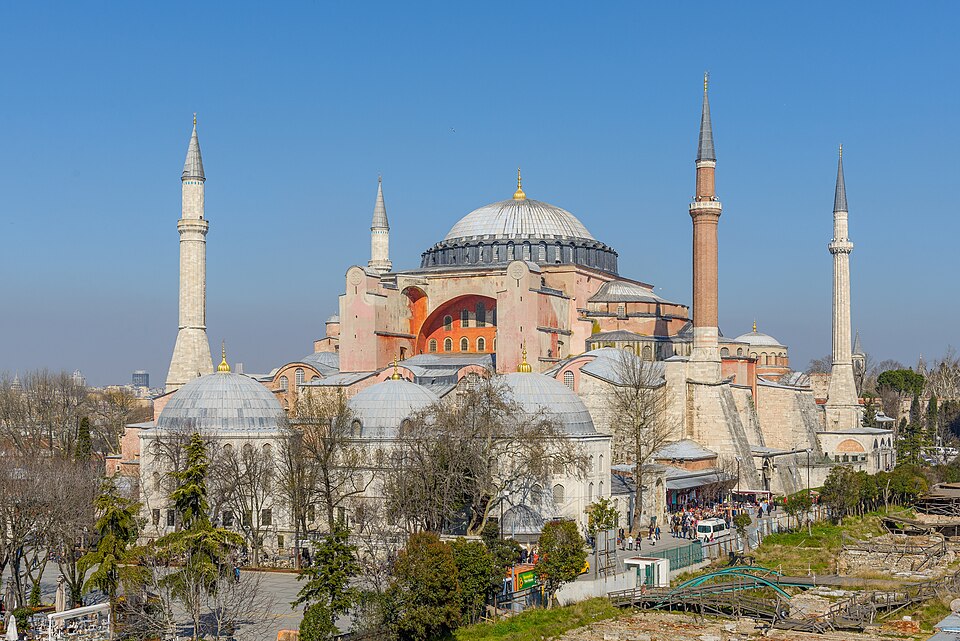
 Photo: Arild Vågen / Wikimedia Commons, CC BY-SA 3.0
Istanbul
The Bosphorus, the Grand Bazaar, and neighbourhoods on both the European and Asian sides.
This Istanbul travel guide is for a long weekend or a week across the Bosphorus: stay in Sultanahmet or Karaköy, cross to the Asian side at least once, and leave a morning for the Grand Bazaar so the other days stay on foot. It covers both airports, getting around, where to stay, the main sights and their closing days, food, and day trips.
At a glance
- Airports: Istanbul Airport (IST), European side; Sabiha Gökçen (SAW), Asian side
- Time zone: UTC+3 all year
- Currency: Turkish lira (TRY)
- Language: Turkish; English is common in hotels and the main sights
- Plugs: types C and F (European two-pin), 230 V
- Best months: April to May and September to October
- Trip length: three to four days for the highlights, a week to add day trips
Airports
Istanbul Airport (IST), on the European side about 40 km north of the centre, handles most international flights. The M11 metro line links it to the city metro network, and Havaist airport buses run to Taksim, Sultanahmet, and other districts. A taxi to Sultanahmet usually takes 45 to 75 minutes depending on traffic.
Sabiha Gökçen (SAW), on the Asian side, is used by many low-cost airlines. The M4 metro runs from the airport to Kadıköy, where ferries cross to the European side. Check which airport your flight uses before booking a hotel, because crossing the city at rush hour can take well over an hour.
Getting around
An Istanbulkart, sold and topped up at machines in stations and piers, pays for trams, the metro, the Marmaray rail tunnel, buses, funiculars, and ferries. One card can be shared by several people.
- T1 tram: runs through Sultanahmet, past the Grand Bazaar, across the Galata Bridge to Karaköy and Kabataş.
- Ferries: cross the Bosphorus between Eminönü, Karaköy, Beşiktaş, Kadıköy, and Üsküdar. They are cheap and one of the best views of the city.
- Funiculars: the Tünel climbs from Karaköy to the top of İstiklal Avenue, and the F1 runs from Kabataş to Taksim.
- Taxis: insist on the meter or use a ride-hailing app; traffic can make a short trip slow.
Where to stay
- Sultanahmet: next to Hagia Sophia, the Blue Mosque, and Topkapı. Best for a first visit focused on the old city; quiet at night.
- Karaköy and Galata: cafés, galleries, and the Galata Tower, with the tram and ferries on the doorstep. A good balance of sights and evenings out.
- Beyoğlu and Cihangir: near İstiklal Avenue and Taksim, with lots of restaurants and nightlife; streets are steep.
- Beşiktaş: lively and local, near Dolmabahçe Palace and the Bosphorus shore.
- Kadıköy: on the Asian side, known for its food market and a more residential feel, a ferry ride from the old city.
What to see
The old city (Sultanahmet)
- Hagia Sophia: built as a church in the 6th century and now a working mosque. Foreign visitors enter with a ticket through a separate route to the upper gallery.
- Blue Mosque (Sultan Ahmed Mosque): free to enter, closed to visitors during the five daily prayers.
- Topkapı Palace: the Ottoman sultans’ palace, with the Harem and treasury. Closed on Tuesdays.
- Basilica Cistern: an underground Byzantine water reservoir with hundreds of columns and two Medusa-head bases.
- Süleymaniye Mosque: Sinan’s masterpiece on a hill above the Golden Horn, often calmer than the Blue Mosque, with a wide view from the terrace.
Across the Golden Horn
Galata Tower stands above Karaköy, and İstiklal Avenue runs from Tünel to Taksim Square, with its old red tram. Istanbul Modern, on the Karaköy waterfront, shows Turkish contemporary art. Dolmabahçe Palace, the later Ottoman palace on the Bosphorus at Beşiktaş, is closed on Mondays.
Balat and Fener
These old neighbourhoods on the Golden Horn have steep streets of colourful houses, churches, synagogues, and small cafés. The Chora (Kariye) Mosque nearby holds some of the finest Byzantine mosaics in the city.
The Asian side
Kadıköy’s market streets are full of fishmongers, pickle shops, and meyhanes (taverns). Moda, just south, has a seaside promenade for the sunset. Üsküdar has Ottoman mosques and the Maiden’s Tower on a tiny island just offshore.
The Grand Bazaar and Spice Bazaar
The Grand Bazaar, one of the oldest covered markets in the world, is closed on Sundays. Go early on a weekday before it fills up, then walk downhill through the shopping streets to the Spice Bazaar near the ferry piers at Eminönü. Haggling is normal for carpets, lamps, and leather; fixed prices are more common in modern shops. Take your time and compare a few stalls before buying anything large.
A Bosphorus cruise
The public ferry company runs a long Bosphorus tour from Eminönü up to Anadolu Kavağı near the Black Sea, with time for lunch and a walk up to Yoros Castle before the return. Shorter tours of one to two hours leave from Eminönü and Karaköy. A regular commuter ferry from Eminönü to Kadıköy or Üsküdar gives a good short version.
Food
- Turkish breakfast: cheeses, olives, tomatoes, eggs, honey and clotted cream (kaymak), with endless tea.
- Simit: sesame bread rings sold from street carts all day.
- Balık ekmek: grilled fish sandwiches by the water at Eminönü.
- Meze and rakı: an evening in a meyhane in Beyoğlu or Kadıköy.
- Kebabs and pide: from İskender to Adana, plus lahmacun (thin spiced flatbread).
- Sweets: baklava, künefe, and Turkish delight (lokum).
A tip of about 10% is usual in sit-down restaurants if service is not already included.
Day trips
- Princes’ Islands: a ferry ride from Kabataş or Eminönü; Büyükada has no cars, wooden mansions, and quiet coves.
- The upper Bosphorus: fishing villages such as Rumeli Kavağı and Anadolu Kavağı, and the Rumeli Fortress at Bebek.
- Bursa: the first Ottoman capital, known for its mosques, silk bazaar, and İskender kebab, reachable by fast ferry and bus.
Four days in Istanbul
- Day 1: Hagia Sophia, the Blue Mosque, and the Basilica Cistern; sunset from the Galata Bridge.
- Day 2: Topkapı Palace (not on a Tuesday) in the morning, the Grand Bazaar and Spice Bazaar (not on a Sunday) in the afternoon.
- Day 3: Bosphorus ferry, Dolmabahçe Palace (not on a Monday), and an evening in Karaköy and Beyoğlu.
- Day 4: ferry to Kadıköy for the market and Moda, or Balat and the Süleymaniye Mosque.
When to go
April to May and September to October are the most pleasant, with mild days and the tulip festival in April. Summer is hot, humid, and busy, especially in the old city. Winter is cool and wet with occasional snow, but quieter, and the main sights have shorter queues. During Ramadan, mosques and sights stay open, and the evenings are lively when people break the fast.
Money and entry
The currency is the Turkish lira (TRY). Cards are accepted almost everywhere; keep some cash for small shops, bazaars, and ferries if you are not using an Istanbulkart. Many nationalities can visit without a visa for a set period, and others apply online through the official Türkiye e-Visa site. Only use that official site; look-alike sites charge extra.
Etiquette and practical tips
- Mosques ask visitors to cover shoulders and knees, and women to cover their hair. Take your shoes off at the entrance; scarves are often lent at the door.
- Avoid visiting mosques during prayer times, especially Friday midday prayers.
- Tap water is treated, but most people drink bottled water.
- Be wary of friendly strangers who suggest a bar or a carpet shop; it is a common way to get overcharged.
- Streets are steep and cobbled in many areas, so bring comfortable shoes.
Plan the trip
That weekend is the Istanbul city break. The live fare comes from a search from your own city to IST or SAW.
Fares are not stored on this page. Use the search to compare live prices from the providers.