
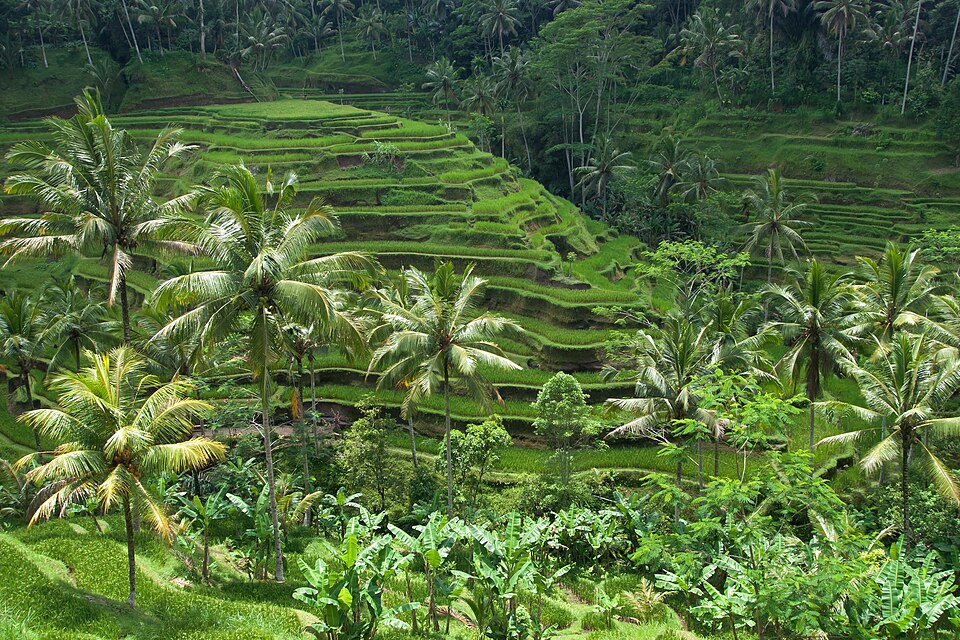
 Photo: Vyacheslav Argenberg / Wikimedia Commons, CC BY 4.0
Bali
Rice terraces around Ubud, temples, and beach towns in the south. The airport is DPS.
This Bali travel guide splits the island into the parts most visitors combine: rice terraces and temples around Ubud, and beach towns in the south. The flight is often one stop, so keep the first day light. Below are the airport, getting around without a train network, where to stay, the main temples and sights, food, a one-week plan, seasons, and entry rules.
At a glance
- Airport: I Gusti Ngurah Rai International (DPS), near Denpasar and Kuta
- Time zone: UTC+8 (Central Indonesia Time), no daylight saving
- Currency: Indonesian rupiah (IDR)
- Languages: Indonesian and Balinese; English is common in tourist areas
- Plugs: types C and F (European two-pin), 230 V
- Dry season: roughly April to October
- Trip length: a week covers Ubud and one beach area; ten days or more for the east or the Nusa islands
Arriving at DPS
I Gusti Ngurah Rai International Airport (DPS) is in the south of the island, about 15 to 30 minutes from Kuta and Seminyak and roughly 1.5 to 2 hours from Ubud, depending on traffic. Many flights arrive in the evening after a connection, so a first night near the airport or in the south, then Ubud the next day, is an easy start. Pre-booked hotel transfers, the official airport taxi counter, and ride-hailing pickups are all available.
Getting around
Bali has no train network, and traffic in the south is slow at peak times, so plan fewer moves rather than more.
- Private driver: the most common way to sightsee. Drivers are hired by the day, with a set number of hours, and take you to several temples or terraces in one loop.
- Ride-hailing apps: Grab and Gojek offer cars and motorbike taxis in most tourist areas, though some villages restrict pickups.
- Scooters: popular but risky if you are not experienced. You need an international driving permit that covers motorcycles, and travel insurance often excludes riding without one. Always wear a helmet.
- Fast boats: leave from Sanur for Nusa Penida and Nusa Lembongan, and from Padang Bai and Serangan for the Gili Islands and Lombok.
Traffic drives on the left.
Where to stay
- Ubud: green, inland, and cooler at night. Rice terraces, temples, yoga, and craft villages. No beach.
- Seminyak: beach clubs, restaurants, and shopping; busy and polished.
- Canggu: surf beaches, cafés, and a younger crowd; traffic can be heavy.
- Uluwatu and the Bukit peninsula: cliffs, surf breaks, and clifftop hotels in the far south.
- Sanur: calm, reef-protected beach and a seafront path, good for families and for boats to the Nusa islands.
- Nusa Dua: large resorts on a gated, tidy beach strip.
- Amed and the east: quiet black-sand beaches, snorkelling, and diving, with Mount Agung behind.
- Munduk and the north: lakes, waterfalls, and cool hill villages.
What to see
Around Ubud
- Tegallalang rice terraces: the best-known terraces, north of Ubud. Go early to beat crowds and heat.
- Sacred Monkey Forest Sanctuary: a temple forest in Ubud itself, home to hundreds of long-tailed macaques. Keep bags closed and do not carry food in your hands.
- Tirta Empul: a water temple where Balinese Hindus bathe in holy springs; visitors may join with a sarong and respect for the ritual.
- Goa Gajah (Elephant Cave): an ancient carved cave and bathing pools just outside town.
- Campuhan Ridge Walk: an easy walk along a grassy ridge, best at sunrise.
Further afield
- Jatiluwih rice terraces: wide terraces in the west, part of Bali’s UNESCO-listed subak irrigation landscape.
- Ulun Danu Beratan: the lake temple at Bedugul, often photographed in the morning mist.
- Tanah Lot: a sea temple on a rock, best at sunset.
- Uluwatu Temple: a clifftop temple with a kecak fire dance at sunset.
- Mount Batur: a pre-dawn hike to watch sunrise from an active volcano, usually with a local guide.
- Lempuyang Temple: the “gates of heaven” in the east, with long queues for the famous photo.
- Nusa Penida: dramatic cliffs and beaches such as Kelingking, and manta-ray snorkelling, by fast boat from Sanur.
Temple etiquette
Bali is mostly Hindu, and ceremonies happen almost every day. At temples, wear a sarong and a sash; they are usually lent or rented at the entrance. Cover your shoulders, do not climb on shrines, and do not step on the small palm-leaf offerings (canang sari) you will see on pavements and doorsteps. If a ceremony is taking place, keep to the side and do not stand higher than the priest.
Food
- Nasi campur: rice with several small dishes, the everyday lunch.
- Babi guling: Balinese roast suckling pig with spices.
- Bebek betutu: slow-cooked spiced duck.
- Sate lilit: minced fish or meat wrapped around lemongrass and grilled.
- Nasi goreng and mie goreng: fried rice and noodles, found everywhere.
Small local warungs are the cheapest and often the tastiest places to eat. Ubud, Seminyak, and Canggu also have many vegetarian, vegan, and international cafés.
A week in Bali
- Day 1: arrive at DPS and rest in the south or in Sanur.
- Day 2: transfer to Ubud; Monkey Forest and the town centre.
- Day 3: Tegallalang terraces, Tirta Empul, and a coffee plantation with a driver.
- Day 4: Mount Batur sunrise hike or a cooking class; spa in the afternoon.
- Day 5: move to the coast, with Tanah Lot at sunset on the way.
- Day 6: beach day, or a fast-boat day trip to Nusa Penida.
- Day 7: Uluwatu Temple and the kecak dance before your flight.
When to go
The dry season runs roughly from April to October, with lower humidity and the best conditions for hiking, diving, and the beaches. July, August, and the Christmas and New Year period are the busiest and book up early. The wet season, from about November to March, brings heavy tropical downpours, usually in the afternoon or evening, with sunny spells in between; hotels are quieter and greener. Temperatures stay around 27 to 32°C year-round, cooler in Ubud and the hills.
Nyepi, the Balinese Day of Silence, usually falls in March. For 24 hours the whole island shuts down: the airport closes, no one may leave their hotel, and lights stay low. Check the date if your trip is in March.
Money and entry
The currency is the Indonesian rupiah (IDR). Use ATMs inside banks or shopping centres, and count your notes at money changers, where short-changing tricks still happen. Cards are accepted in most hotels and larger restaurants; carry cash for warungs, temples, and drivers.
Many nationalities can get a visa on arrival or apply online first (an e-VOA), and Bali charges every international visitor a one-off tourist levy, best paid online before you arrive. Check current rules on the official Indonesian immigration site. Your passport should be valid for at least six months from arrival.
Health and practical tips
- Do not drink tap water. Use bottled water or refill stations, and be careful with ice and salads at very cheap stalls.
- Use mosquito repellent, especially in the wet season.
- Currents are strong on many west-coast beaches; swim between the flags where lifeguards are present.
- Do not touch or feed monkeys, and keep sunglasses and phones secured near temples.
- Bargaining is normal at markets, but keep it friendly.
Plan the trip
That week is Bali with the family. Use the search to compare flights to DPS from your own city.
Fares are not stored on this page. Use the search to compare live prices from the providers.